

Topic 6 : LivAdip - Liver and Adipose Tissue Physiomics in Metabolic Diseases
Presentation of the research topic
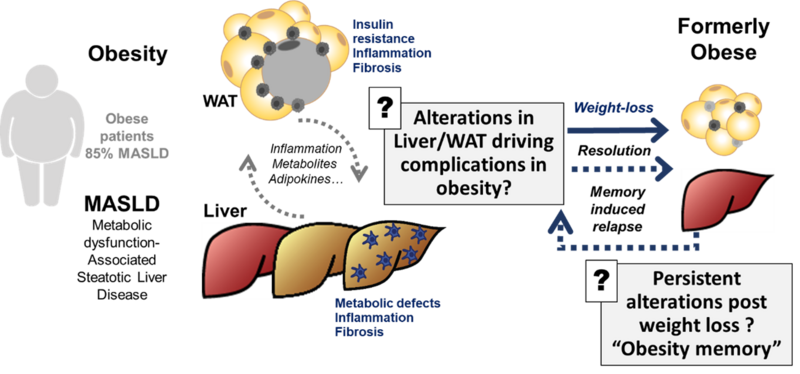
Obesity and its metabolic complications are a major global health challenge. It has long been accepted that weight loss is the most effective therapeutic strategy to combat conditions such as type-2 diabetes and metabolic dysfunction-associated steatotic liver disease (MASLD). Recent and emerging pharmacological strategies have shown promise in this area, however, with nearly 25% of the global population affected by obesity, the sheer scale of the problem remains daunting. It is also becoming clear that weight loss following prior obesity does not completely reverse certain aspects of the organ physiology. In the LivAdip team, we focus on the role of the liver-adipose tissue dialog in the context of obesity, and aim to understand the changes in these tissues in the pathogenesis of obesity and MASLD and the mechanisms of disease regression or persistence following weight loss.
Key-words
Obesity ; MASLD ; Adipose Tissue ; Liver
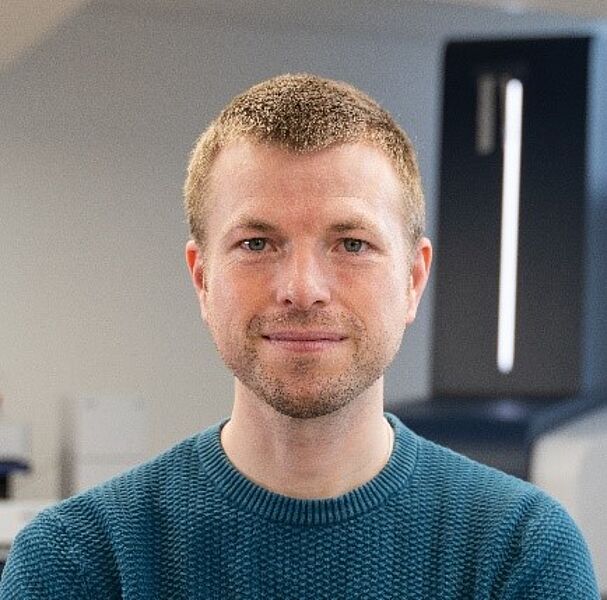
Joel Haas, PhD, HDR
Research director Inserm, Team Leader
ORCID : 0000-0002-0028-5988
I am a full-time INSERM research director with extensive experience studying glucose and lipid metabolism in the context of cardiometabolic disease. Prior to my PhD, I worked as a research associate at the Joslin Diabetes Center at Harvard Medical School studying the contribution of defective hepatic insulin signaling to complications of type-2 diabetes. I then obtained a PhD in biochemistry and molecular biology at the University of California-San Francisco, studying the physiological roles of triglyceride synthesizing enzymes (DGAT1 and DGAT2). In 2013, I joined the INSERM laboratory UMR1011 in Lille, (Nuclear Receptors, Metabolic and Cardiovascular Diseases) for a post-doctoral fellowship and in 2019 I was obtained a full-time tenured researcher position in the same department. I currently co-lead a team entitled “LivAdip: Liver and Adipose Tissue Physiomics in Metabolic Disease” with Dr. Delphine Eberlé. I have obtained numerous prestigious awards including the EMBO Long Term Fellowship, French ANR Young Researcher Grant, and an ERC Starting grant. My main research project focuses on how metabolic factors impact the function of the innate immune system in pathogenesis of metabolic dysfunction-associated steatotic liver disease (MASLD).
Delphine Eberlé, PhD, HDR
Professor, Lille University, Team leader
ORCID : 0000-0003-2211-6146
I am professor of Physiology at Lille University. I am particularly interested in exploring the role of adipose tissue plasticity in the context of obesity and its associated complications MASLD (Metabolic dysfunction-associated steatotic liver disease). Passionate about human nutrition, I began my scientific journey at the École Nationale Supérieure d'Agronomie in Rennes, earning an engineering degree in Agronomy with a focus on Biochemistry and Genetics. I obtained my PhD in Paris studying the genetics of obesity, with a focus on the lipogenic transcription factor SREBP-1. I then completed postdoctoral trainings at the Joslin Diabetes Center in Boston and at the University of California-San Francisco (USA), where I focused on mechanisms of inflammation development and resolution in obesity and atherosclerosis. In 2013, I joined the Biology Department at the Faculty of Science and Technology at Lille University as an Associate Professor, and led studies on the developmental programming of adipose tissue and obesity, particularly how early postnatal nutrition influence long-term metabolic health via epigenetic mechanisms. In 2020, I joined the UMR1011 research unit and the European Genomic Institute for Diabetes (EGID), to continue my research on adipose tissue function in metabolic diseases. I currently co-direct the thematic group LivAdiP, focusing on liver-adipose tissue crosstalk in obesity and MASLD combining multidisciplinary approaches from omics to physiology. Since 2024, I have served as Vice President of AFERO, the French Association for Studies and Research on Obesity.
Emilie CADART
Engineer, Lille University
After earning a Bachelor's degree in Life Sciences, with a focus on Biology and Biochemistry, at the University of Sciences Jean Perrin in Lens, I pursued a Master's degree in Biology and Health, specializing in Fundamental and Clinical Oncology. I then held a position as a research engineer at UGSF UMR 8576 for one year before joining the U1011 unit, within Bart Staels' team, as an assistant engineer.
Clarisse CHAMPIN,
Engineer, INSERM
After completing my engineering studies in Agronomy with a specialization in Biotechnology at ENSAIA (Nancy), I joined the UMR 1011 “Nuclear Receptors, Metabolic and Cardiovascular Diseases” directed by Prof. Bart Staels. I am currently part of the LivAdip team, where I work as a research engineer. Within the framework of the ERC Metabo3DC project, my work focuses on understanding the metabolic activation of dendritic cells in the context of MASH, combining molecular biology, immunology and cell biology approaches.

Arthur GRENON
Engineer, Lille University
ORCID : 0009-0009-3717-1341
Project manager (APTEEUS) during 2 years: Development of in vitro phenotypical tests for high-throughput screening of repurposable molecules
Study engineer (UMR1011): Involved in scRNAseq project (EvoLiLiD), sc/snRNAseq libraries preparation and scRNAseq analysis
Anne-Sophie JENEQUIN
Engineer in mass spectrometry, INSERM
ORCID : 0009-0003-6205-0409
Anne-Sophie obtained a Master's degree in Biotechnology in 2020, and began her career as a Research Engineer in analytical chemistry, specializing in HPLC-MS/MS, at the Institut Charles Viollette in Villeneuve d’Ascq, FR. Her primary mission was to identify molecules with antibacterial properties, aiming to propose new classes of drugs capable of combating bacteria resistant to existing treatments. Subsequently, she worked in the private sector as a Laboratory Technician specializing in metabolomic studies at Aliri, where she utilized her chromatography skills for high-precision analyses and collaborated with various companies. Finally, she joined the LivAdip team in the department UMR1011as a Research Engineer in analytical chemistry, specializing in HPLC-MS/MS analyses. Her role involves developing an MS platform to conduct metabolomic analyses in close collaboration with research groups
Sarah LAHIRE, PhD
Post-doctoral researcher, INSERM,
ORCID : 0000-0003-2482-6432
I earned my PhD in 2023 at the UR7509 laboratory, where I explored innate lymphoid cells and elastin-derived peptides in COPD, strengthening my expertise in innate immunity, chronic inflammation, and translational immunology. I then completed a postdoctoral fellowship at Rutgers University (Child Health Institute of New Jersey), where I studied ZBTB22 as a regulator of CD8 T cell differentiation and function, focusing on tumor immunity and aging. I am currently a postdoctoral researcher at the Institut Pasteur de Lille, working under the supervision of Dr. Joel Haas. My research focuses on the role of PPARδ in dendritic cells within the context of metabolic dysfunction-associated steatotic liver disease (MASLD).
Enora LE QUESTEL, PhD
Postdoctoral researcher, University of Lille
ORCID : 0009-0008-8237-1572
I completed a Bachelor’s and Master’s degree in Biology and Health Sciences, during which I carried out my first research internship at the Institut du Thorax in Nantes. This experience sparked a strong interest in scientific research, leading me to pursue my academic journey in the same unit. I obtained my PhD in 2024 and my project focused on the characterization of a regulatory node involving a post-translational modification in hepatic metabolism and its link to to the circadian clock. Driven by a continued passion for research, I am now continuing my path with a postdoctoral position. I am joining the unit to study the mechanisms of cellular memory in adipose tissue following weight loss.
Pelin SERMIKLI, PhD
Postdoctoral fellow, Lille University
pelin.sermikli[@]univ-lille.fr
ORCID : 0000-0001-9930-1919
I obtained my PhD in 2020 at the University of Lille within UMR1011–Team 3, where I developed a strong background in immunology and immunometabolism. My research focused on the contribution of myeloid cells to obesity, insulin resistance and MASH, and I also contributed to research on the role of GDF15 in metabolic disease progression. I then joined Professor Ronald Evans’s laboratory at the Salk Institute for Biological Studies in San Diego, California, USA, where I investigated the circadian regulation of hepatic lipid metabolism and identified FGF1 as an orchestrator of hepatic triglyceride secretion.
In July 2026, I returned to UMR1011 and joined the LivAdip team as a postdoctoral researcher at the Institut Pasteur de Lille, working under the supervision of Dr. Joel Haas. My position is supported by the interdisciplinary Multi Organ System for Assesing Infection and Chronicity (MOSAIC) project, within which I will contribute to the development of human organ-on-chip and multi-organ microphysiological platforms to study infection, chronicity, and metabolic diseases. Additionaly, my research focuses on liver metabolism and liver–adipose tissue crosstalk during the progression and regression of obesity and MASLD, with a particular interest in the role of the endoplasmic reticulum.
Congratulations to Camilla defended her PhD on Dec 8th!
Joel presented the team’s work at the biannual conference of the Club Français des Cellules Dendritiques (Dec 4-5, 2025 at Institut Curie, Paris).
Happy to welcome our new team members Enora, Sarah and Clarisse!
LivAdip group from UMR1011 developped lot of scientific skills :
- Single Cell/Single Nuclei RNAseq (10X Chromium)
- LCMS Metabolomics (Bruker TimsTOF Pro2)
- Metabolic Cages (Sable Systems Promethion)
- Seahorse Extracellular Flux Analyzer
List of main publications from LivAdip group:
Johanns M, Haas JT, Raverdy V, Vandel J, Chevalier-Dubois J, Guille L, Derudas B, Legendre B, Caiazzo R, Verkindt H, Gnemmi V, Leteurtre E, Derhourhi M, Bonnefond A, Froguel P, Eeckhoute J, Lassailly G, Mathurin P, Pattou F, Staels B, Lefebvre P. Time-of-day-dependent variation of the human liver transcriptome and metabolome is disrupted in MASLD. JHEP Rep. 2023 Oct 27;6(1):100948. PMID: 38125300
Deprince A, Hennuyer N, Kooijman S, Pronk ACM, Baugé E, Lienard V, Verrijken A, Dirinck E, Vonghia L, Woitrain E, Kloosterhuis NJ, Marez E, Jacquemain P, Wolters JC, Lalloyer F, Eberlé D, Quemener S, Vallez E, Tailleux A, Kouach M, Goossens JF, Raverdy V, Derudas B, Kuivenhoven JA, Croyal M, van de Sluis B, Francque S, Pattou F, Rensen PCN, Staels B*, Haas JT*#. Apolipoprotein F Is Reduced in Humans with Steatosis and Controls Plasma Triglyceride-Rich Lipoprotein Metabolism. Hepatology 2023 Jun 23 *Co-supervising authors, #Corresponding Author
Butruille L*, Marousez L*, Pourpe C, Oger F, Lecoutre S, Catheline D, Görs S, Metges CC, Guinez C, Laborie C, Deruelle P, Eeckhoute J, Breton C, Legrand P, Lesage J, Eberlé D. Maternal high-fat diet during suckling programs visceral adiposity and epigenetic regulation of adipose tissue stearoyl-CoA desaturase-1 in offspring. Int J Obes (Lond). 2019 Dec;43(12):2381-2393.
Grzych G, Chávez-Talavera O, Descat A, Thuillier D, Verrijken A, Kouach M, Legry V, Verkindt H, Raverdy V, Legendre B, Caiazzo R, Van Gaal L, Goossens JF, Paumelle R, Francque S, Pattou F, Haas JT*, Tailleux A*, Staels B*#. NASH-related increases in plasma bile acid levels depend on insulin resistance. JHEP Rep. 2020 Dec 16;3(2):100222., *Co-supervising authors, #Corresponding Author
Marousez L.*, Hanssens S*., Butruille L., Petit C., Pourpe C., Besangez C., Rakza L., Storme L., Deruelle P., Lesage J., and Eberlé D. Breast milk apelin level increases with maternal obesity and high-fat feeding during lactation. International Journal of Obesity. 2021, 45(5):1052-1060
Haas JT*, Vonghia L*, Mogilenko DM*, Verrijken A, Molendi-Coste O, Fleury S, Deprince A, Nikitin A, Woitran E, Ducrocq-Geoffroy L, Pic S, Derudas B, Dehondt H, Gheeraert C, van Gaal L, Driessen A, Lefebvre P, Staels B#, Francque S#, Dombrowicz D# Transcriptional network analysis implicates altered hepatic immune function in NASH development and resolution. Nature Metabolism, 1, 2019 Jun;1(6):604-614 * Co-first authors
List of fundings obtained by LivAdip group:

Dr Delphine EBERLE, Professor
delphine.eberleuniv-lille.fr
Dr Joel HAAS, Research director 2, INSERM
joel.haaspasteur-lille.fr
Audrey Dupré, PhD Student (2022-2025)
Camilla Klaimi, PhD Student (2022-2025)
Ghania Kara-Ali, Post doctoral researcher (2022-2025)
Marine Huillet, Post doctoral researcher (2024-2025)
Pauline Jacquemain, research assistant (2020-2025)
Viktor Lienard, PhD Student (2021-2025)
Kevin Ory, Post doctoral researcher (2020-2024)
Charlène Pourpe (2020-2023)
Audrey Deprince, PhD Student (2018-2021)
Lucas Buttin, MSc student then engineer (2025-2026)